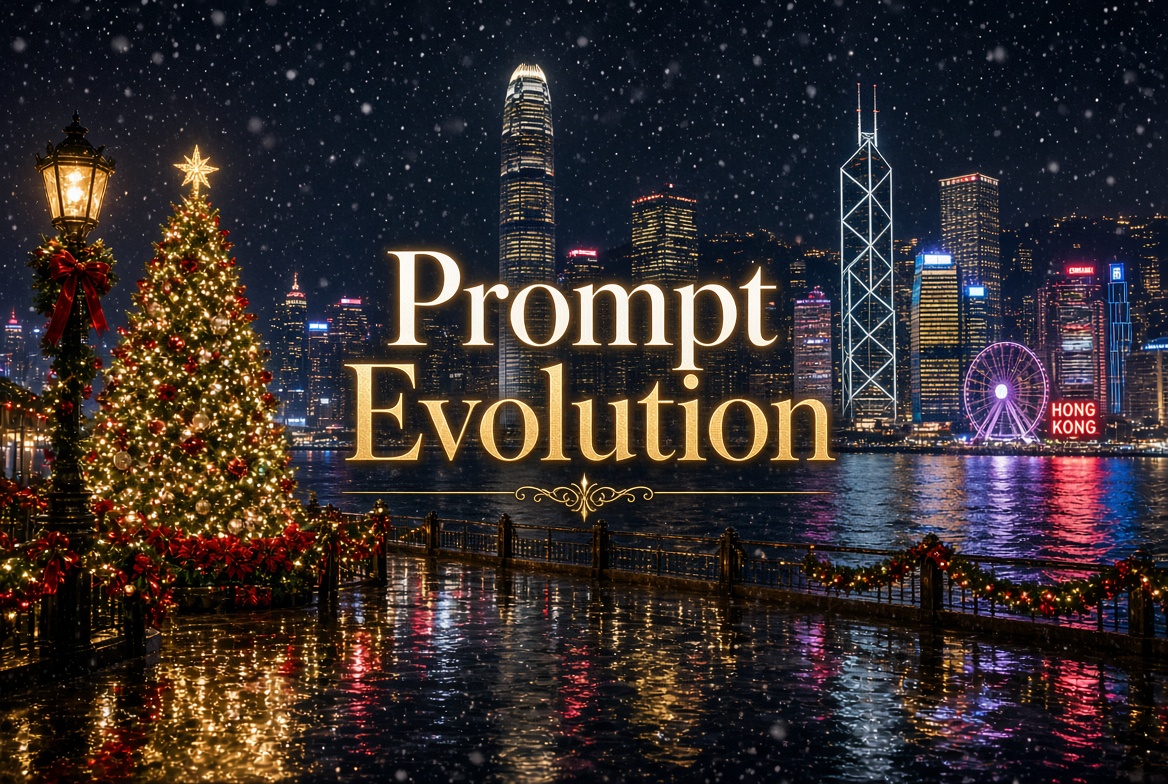
Prompt Evolution: How My AI Workflow Shifted from “Mega-Prompts” to Simple Conversations
Painless AI Lab – A Hong Kong Practitioner’s Real-World AI Journey (Part 47):
If you read my earlier posts or Chapter 1 of my book, “The $300 AI Rebuild” you know I used to swear by the “mega-prompt”.
Back when I first started learning AI in Hong Kong, every tutorial told us to write massive paragraphs: “Act as a senior consultant with 20 years of experience, take a deep breath, follow these 12 rules…” I spent hours building prompt templates, thinking longer meant smarter.
Honestly? Half the time, the AI still missed the point, hallucinated details, or gave me stiff, robotic answers.
Over the past few months, while building small tools and running daily workflows, I realized something important: we are in the middle of a major prompt evolution. Today’s reasoning models don’t need a theatrical speech. When you overload them with rigid instructions upfront, you actually box them in.
Instead of writing a novel, I have switched to a much simpler, conversational approach: state the clear goal, set boundaries, and tell the AI to ask questions before it starts.
Here is how my prompts look now across two everyday tasks:
1. Images (Book covers or product visuals)
· My new prompt: “A photorealistic of night photo of Victoria Harbour in Hong Kong, looking toward the skyline, wet streets reflecting neon lights, slight rain.
· Goal: high-quality image for a book cover.
· Ask me about color grading preference or text layout space before generating.
2. Writing (Social media updates)
· My new prompt: “Write a LinkedIn post about Prompt Evolution
· Goal: sound natural and reflective, not salesy. Audience is AI or industry professionals.
· Ask me which 1–2 experiences to focus on before drafting.”
Notice the pattern? Instead of guessing everything the AI needs to know, I force it to interview me first. That single shift has saved me countless revisions and burned tokens.
My New Rules of Thumb for Prompting:
· Start shorter than you think. Add detail only if the first draft misses the mark.
· “Ask me what you don’t know” beats a 500-word instruction manual every time.
· Keep output formats strict. Asking for JSON, a Markdown table, or specific bullet points is still essential.
· Use few-shot examples selectively. Only paste examples when you need a very specific coding or visual style.
· Treat “Role Prompting” as optional. Starting with “You are an expert…” rarely moves the needle anymore unless a specific model responds well to it.
AI changes fast, and the best thing we can do as solopreneurs isn’t memorizing rigid formulas. It is staying flexible and testing what actually saves time in the real world. (If you want to see how I combine simple prompts with zero-code workflows to run a lean business from scratch, you can check out the full playbook in The $300 AI Rebuild on my site.)
How has your prompting style changed this year?
Are you still using saved mega-templates, or keeping it short and conversational?
發佈留言